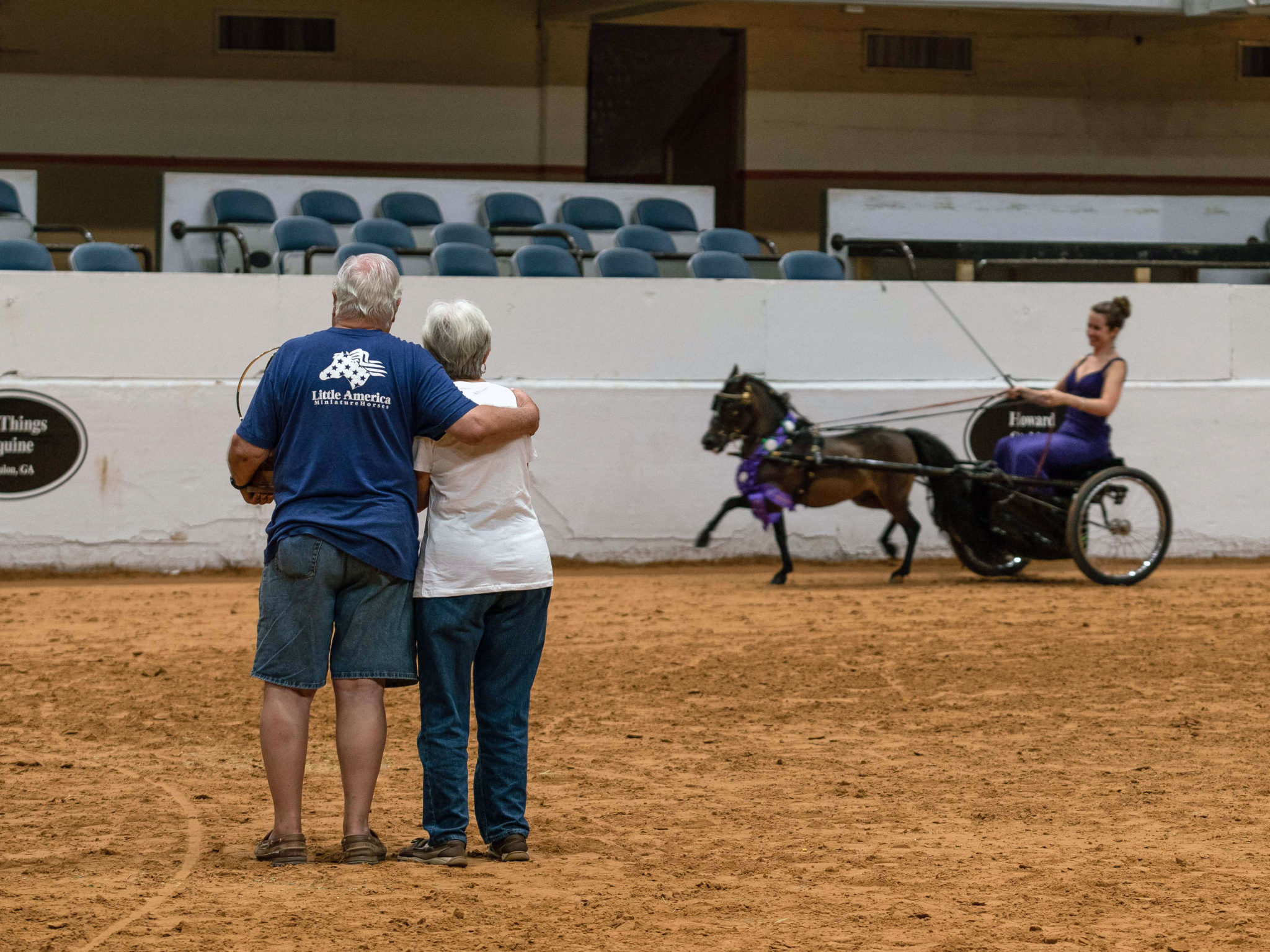

The first time I ever saw Boone’s Little Buckeroo I was showing at the
State Fair of Texas in 1983. That happened to also be the National Show for the
year. I was going to the arena to watch a class and ran into Lowell Boone. I
stopped to visit. He was waiting to go into the ring with the most delicate,
gorgeous horse that I had ever seen. I had heard about a buckskin colt that he
had been showing and that he had won the championship in the 1980 and 1981
national show put on by the International Miniature Horse Registry.

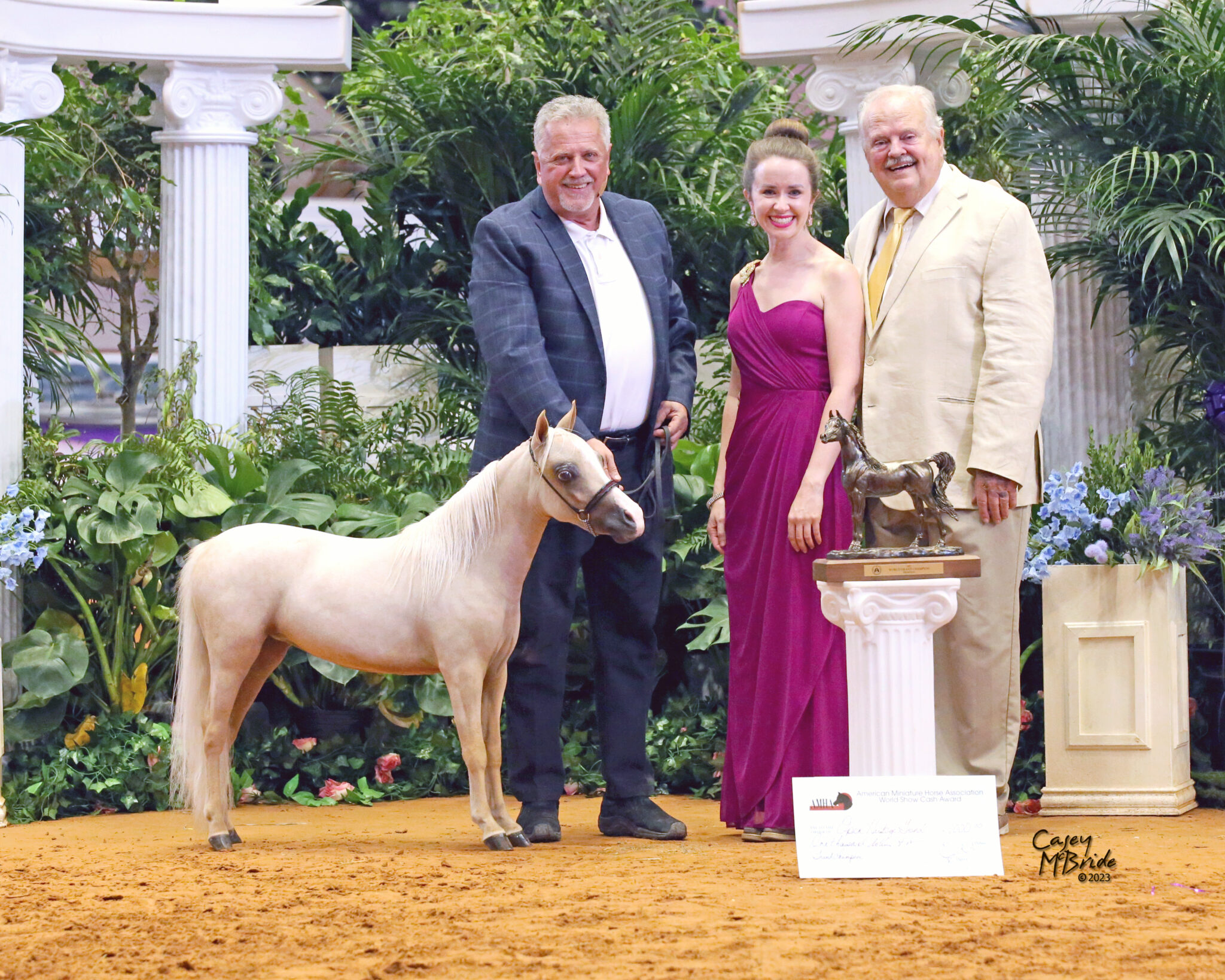
All I had heard did not do this little horse justice! Through the years I have
seen only a handful of miniature stallions that seemed to be in a class all of
their own. Bond Sir Galahad, Prince Tennessee of Monashee, and Boone’s Little
Buckeroo - such refinement, small size, and elegance that they seem more like
gazelles than horses. Justice can never be done by the camera with a horse like
this….beautiful pictures exist, yes, but until you walk up to them in the flesh
you cannot imagine the delicacy that they possess.
Sometime later I heard that the Eberths were getting into the miniature horse business in a big way. They had bought a group of mares from Bob Bridges and had talked Lowell into selling Buckeroo to head their breeding program. The rest, as they say, is history.
The following two articles were published in The Miniature Horse
May-June, 1997, and are used by permission of the authors who can tell the whole
story so much better than I. (Click on the authors names below to
view the articles).
The following was a note that John Eberth posted on a miniature horse discussion board, Lil Beginnings, February 26, 2002, when the discussion turned to Buckeroo.
It has been said that "word of mouth is the best advertising". Growing up, my family did not spend a million dollars advertising Buckeroo. My mom did not put an ad of Buckeroo in every issue of every magazine printed, like some farms have done to push their stallions to try and make people believe that the stallion is that great. My mom still does not do that. If you spend enough money and say something enough times sooner or later people will believe that blue is purple. However, once the farm is gone or once the stallion has died, did those stallions and their offspring still bring the prices and were they considered great stallions by other well established breeders. Buckeroo is just now seeing the "popularity hype" that some other stallions saw much earlier in the stallions lives. Do those stallions still bring high prices, some do because they actually produce great quality offspring, while others totally were valuable because someone spent a lot of money saying the offspring were great quality.
It has also been said that "the proof is in the offspring". There are very few
stallions that their offspring have value after the stallions are dead or
non-productive, pay attention to those bloodlines and where they came from and
what horses have those bloodlines now, and the values they have. Pay attention
to older established breeders and the broodstock they use and the pedigrees
behind those horses, that will tell you what bloodlines are truly valuable.
Prepotency is the true test of a great stallion. Grand-get and great-grand get
with qualities of a famous stallion show dominant genes that are desired and can
still be passed on.
John Eberth
Questions
or comments?